Why I Wrote Deliver What Matters, When It Matters
Updated: Apr 30

And why delivery optimization might be the missing link in your team’s performance
You’ve probably felt this before. I know I have.
The team is busy. Lots of work items on the board. Meetings and events are happening like clockwork. From the outside, everything looks fine.
But something is off.
Work takes longer than expected. Priorities seem to always be shifting. And even when things finally get delivered, they don’t always land the way you hoped. I’ve seen this across teams, industries, and roles: smart people working hard, but still struggling to consistently deliver meaningful outcomes when they matter most.
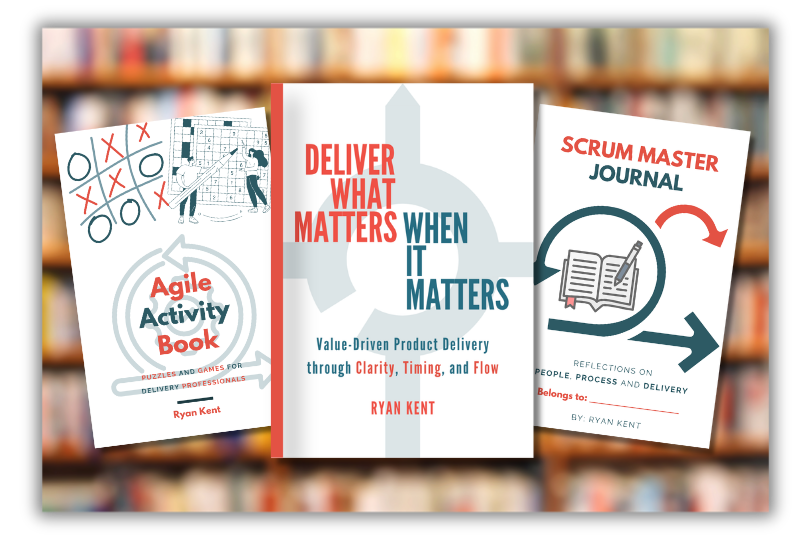
That’s what led me to write Deliver What Matters, When It Matters.
The Problem Beneath the Problem
I see teams full of talent, putting in the effort: people who genuinely want to do good work and are motivated to deliver.
The struggle is rarely the will; it's more often the way.
What’s usually missing is alignment across three things:
What actually matters (Value Clarity)
How work moves (Flow Effectiveness)
When it matters most (Timing Intelligence)
We often focus on optimizing bits and pieces of our process, hoping the whole system will follow suit. We refine the backlog to improve the "upstream" view, yet delivery is late because the "downstream" delivery flow is still clogged. We push for speed but end up shipping the wrong work because we lacked true value clarity. We hit aggressive deadlines but burn out the team to get there, souring the culture with context switching and constant fire drills.
These efforts are helpful in isolation, but they rarely fix the whole. The issue isn't any one part; it’s how those parts work together.
Enter the Delivery Optimization Loop™
The Delivery Optimization Loop came from a simple realization:
Delivery isn’t something you fix once. It’s something you keep aligned.
It brings together three perspectives:
Value Clarity so you’re solving the right problems
Flow Effectiveness so work actually moves
Timing Intelligence so you act when it matters
When those start working together, things shift.
Teams stop mistaking activity for progress. They don’t have to trade speed for quality as often. They deliver better outcomes, not just more output.
And they stop feeling like they’re always playing catch-up.
Why This Book Exists
I didn’t write this book to introduce another framework. We have plenty.
I wrote it because I kept seeing the same pattern over and over.
Teams getting stuck because their efforts weren’t connected to value, timing and flow.
They were:
Starting more than they finished
Measuring outputs instead of outcomes
Reacting to urgency instead of understanding timing
Optimizing locally while the system suffered globally
I wanted to create something that helps teams see the system they’re in and actually improve it.
Not just ideas. Something usable.
Delivery Optimization Is a Shift in Thinking
This isn’t about going faster.
It’s about being more deliberate in how you deliver.
It changes the questions:
Are we clear on why this matters?
Is our system helping work move, or slowing it down?
Are we acting at the right time, or just reacting quickly?
Simple questions, but not easy ones.
Answering them usually means recognizing and acknowledging habits that feel productive, but aren’t: Being busy instead of being effective. Starting instead of finishing. Saying yes to everything, instead of choosing deliberately.
A Final Thought
If there’s one idea I hope sticks, it’s this:
Better delivery doesn’t come from working harder inside the same system. It comes from improving the system itself.
The Delivery Optimization Loop™ is a way to do that.
To step back and see what’s really going on. To align what matters, how work flows, and when it happens.
When that comes together, delivery feels different.
Less like a grind. More like something you can rely on.
If this sounds familiar, you’re not alone.
And it’s fixable.

Comments